


You’re typing fast, and your fingers write “inable.” Now you wonder whether it’s a real word, or whether you meant “enable” or “unable.” The confusion happens because all three look and sound alike. “Inable” is not a standard English word. Use “enable” to mean “make possible” and “unable” to mean “not able.”
What Is the Short Answer on Enable, Unable, and Inable?
Enable is a verb meaning to make something possible or to give someone the means to do something. Unable is an adjective meaning not able to do something. “Inable” is a misspelling and should be replaced with one of those two words.
Here is the difference in one pair of sentences:
- The new software enables teams to share files instantly.
- She was unable to attend the meeting.
If you want to say someone or something makes an action possible, choose “enable.” If you want to say someone cannot do something, choose “unable.”
What Does “Enable” Mean?
“Enable” is a verb with two main senses. The first is to give a person or thing the ability, power, or means to do something. The second is to make something possible or active, which is common in technology.
- The scholarship enabled him to finish college.
- Please enable notifications on your phone.
In everyday speech, “enable” is neutral or positive. Giving someone the tools to succeed is enabling in the plain sense.
There is also a psychology sense. An enabler is a person whose behavior unintentionally supports another person’s harmful habits. In that context, “enabling” carries a negative tone, so check the situation before using it.
What Does “Unable” Mean?
“Unable” is an adjective. It describes a person or group that lacks the ability, skill, means, or permission to do something. It almost always appears in the pattern unable + to + verb.
- I was unable to open the attachment.
- The company is unable to offer refunds after 30 days.
It is more formal than “can’t” or “couldn’t.” That makes it a natural fit for emails, notices, and professional writing, where “can’t” might sound too blunt.
How Are Enable and Unable Different?
The two words differ in part of speech, meaning, and sentence structure. “Enable” is something a subject does to make something possible. “Unable” describes a condition of lacking ability.
| Term | Correct? | Part of Speech | Meaning | Typical Pattern |
| Enable | Yes | Verb | To make possible or give the means | enable + someone/something + to + verb |
| Unable | Yes | Adjective | Not having the ability or means | be + unable + to + verb |
| Inable | No | None | Not a recognized word | Replace with enable or unable |
They are not opposites in grammar, even though they sound similar. The true opposite of “enable” is “disable” (or “prevent”). The opposite of “unable” is “able” (or “capable”).
Why Is “Inable” Not a Word?
“Inable” does not appear as a standard entry in major modern dictionaries. It looks like a blend of “enable” and “unable,” and that blend is what makes it easy to type by accident.
Many people also reach for “in-” because English has other words that use it to show negation. Think of “inactive,” “incapable,” and “inadequate.” Since “incapable” exists, “inable” can feel logical. But English did not form the negative of “able” that way.
The noun is inability, which does start with “in-.” That may be the real source of the mix-up: “inability” is correct, but its adjective partner is “unable,” not “inable.”
Does “inable” have any legitimate use? Not as an English word. It may appear as a name or brand in some places, but that is a different matter from standard vocabulary. In ordinary writing, treat it as a typo.
Read More: Baler vs Bailer: What’s the Difference and Which One Do You Need?
Where Do Enable and Unable Come From, and How Are They Pronounced?
Both words are built from “able” plus a prefix. “Able” came into English from Old French and ultimately from Latin habilis, meaning easy to handle or suited to a purpose. The prefix “en-” in “enable” means to make or put into a state, so “enable” literally means “to make able.” The prefix “un-” is the common English negative, so “unable” means “not able.” Both formations appeared in Middle English.
Pronunciation helps tell them apart in speech:
- Enable: ih-NAY-bul (stress on the second syllable)
- Unable: un-AY-bul (stress on the second syllable)
Only the first syllable changes. In fast speech, the two can blur together, which is one reason people mix them up in writing. There is no spelling difference between American and British English for either word.
What Grammar Patterns Follow Each Word?
“Enable” is a regular verb. Its forms are:
- Base form: enable
- Third person singular: enables
- Past tense and past participle: enabled
- Present participle: enabling
- Noun (person or thing that enables): enabler
It usually takes an object, often followed by “to + verb”: “The update enables users to edit offline.” It can also take just an object: “The setting enables dark mode.”
“Unable” is an adjective, so it follows a form of “be” or a linking verb. It has no verb forms. The related noun is “inability,” as in “her inability to attend.” An adverb form, “unably,” is extremely rare and best avoided.
Compare the structures:
- Enable: The grant enabled the team to hire two researchers.
- Unable: The team was unable to hire two researchers.
Notice that “enable” needs an object (the team), while “unable” describes the subject.
How Do You Use Enable and Unable in Real Sentences?
Here are natural examples from different settings.
Everyday conversation
- My phone is almost dead, so I’m unable to take a call right now.
- This app enables me to track my spending without a spreadsheet.
Workplace and email
- I’m unable to join the 2 p.m. call, but I can review the notes afterward.
- The new dashboard enables managers to see results in real time.
Academic writing
- The researchers were unable to replicate the original findings.
- Larger sample sizes enable more reliable conclusions.
Technology and settings
- Enable two-factor authentication to protect your account.
- If you are unable to sign in, reset your password.
In the academic example, “unable” works because the sentence describes a limitation of the researchers. In the second one, “enable” works because larger samples make something possible, so the verb fits.
What Mistakes Do People Make With These Words?
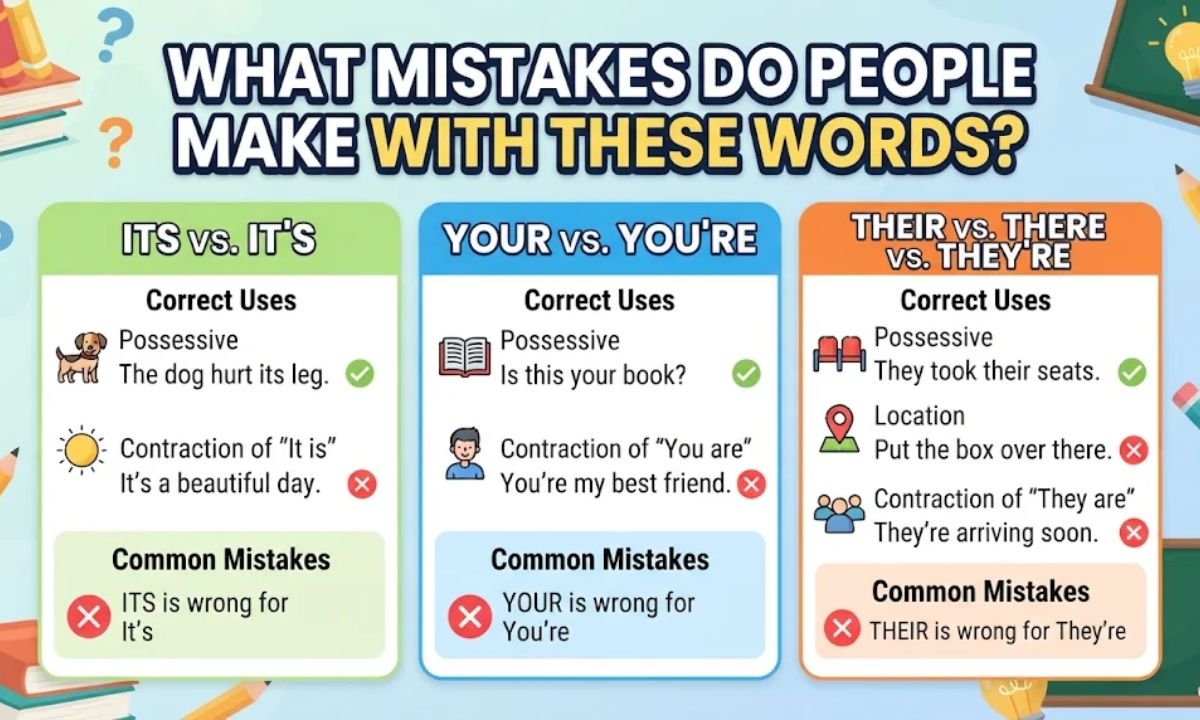
These slips are common, even among experienced writers. They are easy to fix once you know the pattern.
Mistake 1: Using “inable” as a word
- Incorrect: I’m inable to attend the event.
- Correct: I’m unable to attend the event.
“Inable” is not a standard word. When you mean “not able,” use “unable.”
Mistake 2: Using “enable” where you mean “unable”
- Incorrect: She was enable to finish the report.
- Correct: She was unable to finish the report.
“Enable” is a verb, so it cannot follow “was” this way. If the sentence describes a limitation, you need the adjective.
Mistake 3: Using “unable” where you mean “enable”
- Incorrect: The tool unables teams to work faster.
- Correct: The tool enables teams to work faster.
“Unable” is not a verb, so “unables” does not exist.
Mistake 4: Using “inability” as an adjective
- Incorrect: He is inability to swim.
- Correct: He is unable to swim. (Or: His inability to swim worried him.)
“Inability” is a noun. Use it only where a noun fits.
What Related Words Should You Know?
A few neighbors of these words are worth having handy.
For “enable”: empower, allow, permit, equip, facilitate, make possible, activate (for technology). The antonyms are disable, prevent, block, and hinder.
For “unable”: incapable, powerless, not able, can’t. The antonyms are able, capable, and competent.
Some close pairs also cause trouble:
- Disable vs. unable: To disable is to turn something off or make it inoperative. Someone who is unable simply lacks the ability.
- Inability vs. disability: An inability is a general lack of ability. A disability is a specific condition that limits activity. Do not use them interchangeably.
- Incapable vs. unable: “Incapable” suggests a lasting lack of capacity. “Unable” can describe a temporary situation.
Using “unable” for temporary limits and “incapable” for deeper ones keeps your meaning precise.
How Can You Remember Which One to Use?
Try a quick two-step test.
- Ask what the sentence is doing. Is something being made possible? Use “enable.” Is someone lacking ability? Use “unable.”
- Swap in a simple replacement. If “make possible” or “allow” fits, choose “enable.” If “not able” or “can’t” fits, choose “unable.”
A memory hook: “un” means “not,” so “unable” is “not able.” And “en” means “make,” so “enable” is “make able.” If you ever type “inable,” that’s your cue to pause and pick one of those two.
FAQ’s
Is “inable” a word?
No. “Inable” is not a standard English word. Use “unable” to mean “not able” or “enable” to mean “make possible.”
What is the difference between enable and unable?
“Enable” is a verb meaning to make something possible. “Unable” is an adjective meaning lacking the ability to do something. Example: The scholarship enabled her to study abroad, but she was unable to afford housing.
What is the opposite of enable?
The usual opposites are “disable” and “prevent.” In technical settings, “disable” is the most common choice.
Can I say “unable to” in everyday speech?
Yes, but it sounds formal. In casual conversation, “can’t” is more natural. In emails, notices, and professional messages, “unable to” is a polite and common choice.
Conclusion
“Enable” makes things possible, “unable” describes a lack of ability, and “inable” is a typo. If you can remember that “un” means “not” and “en” means “make,” you can choose correctly every time.

Alex Jhon is the admin of Swift Timely, passionate about English grammar, word comparisons, vocabulary, and helping readers improve their language skills with clear, simple explanations.
1 thought on “Enable vs. Unable: Meaning, Difference, and Why “Inable” Isn’t a Word”